


Many manufacturing professionals aren’t exactly excited when they’re assigned to a new product pilot build. Pilot production is often complex, fast-paced, and difficult to measure in terms of productivity or performance. Schedules are usually tight, and in the early stages, even the Bill of Materials (BOM) may not be fully finalized. Many tasks still require manual work, and new manufacturing processes often need time to be refined and stabilized.
The challenges don’t stop there. New products typically introduce new components, many of which arrive as bulk parts or tube-fed components instead of production-ready reels. This can create headaches for SMT assembly lines, forcing operators to place parts manually before the boards can enter the reflow oven. The situation is often even more labor-intensive during final assembly, where a significant amount of manual work may still be required.
 That said, Workingbear would encourage anyone who feels frustrated by the headaches that come with pilot production to look at it from a different perspective. No matter how challenging or inconvenient a pilot build may seem, one fact remains: without a successful pilot build, there can be no successful mass production.
Every product eventually reaches its End of Life (EOL). Ironically, a product that stays in production for too long can become a challenge of its own. As demand declines, you may find yourself supporting only service or repair orders. Imagine receiving an order for just 200 units every six months. Is it worth setting up a production line, performing changeovers, and maintaining specialized tooling and fixtures for such a small build? In many cases, the overhead costs can outweigh the value of the order itself.
So what can we gain from participating in a new product pilot build?
Quite a lot, actually. Pilot production offers valuable learning opportunities that are difficult to find during routine mass production.
One of the biggest benefits is exposure to new technologies and new challenges.
New products often introduce new manufacturing processes, materials, and technologies. As a result, engineers must continually learn and adapt. Sometimes that means attending technical training courses, whether locally or abroad, to develop new skills and stay current with industry trends.
Pilot builds also expose you to challenges that don’t exist on mature products. Design engineers may ask whether test points can be reduced or eliminated to save PCB space. They may explore alternative test methods that require fewer physical test points. In some cases, even component reference designators printed on the PCB may be removed because board space has become so limited. As products continue to shrink, every square inch of PCB real estate becomes increasingly valuable.
Another major benefit is gaining a deeper understanding of product design.
Pilot production often provides direct access to design engineers and the opportunity to understand why certain electrical or mechanical design decisions were made. This knowledge becomes extremely valuable later during mass production because you’ll know which design elements are flexible and which are critical to product performance.
For engineers interested in product design, pilot builds can be an excellent learning experience. Workingbear personally learned many valuable lessons about both electrical and mechanical design while supporting new product introductions. That curiosity eventually led to company-sponsored training in mechanical CAD tools such as Pro/ENGINEER and SolidWorks.
Pilot builds also create opportunities to improve product designs from a manufacturing perspective.
The goal of a pilot build is not only to validate the product design but also to verify manufacturing readiness. This gives manufacturing engineers a chance to recommend design changes that improve producibility, quality, and efficiency.
For example, pilot production may uncover potential screw-stripping issues before mass production begins. It may reveal ways to improve FPC designs used in HotBar soldering applications to reduce trace cracking failures. It can also help define appropriate keep-out areas around screw holes for automated assembly equipment.
As smart manufacturing, automation, and collaborative robots (cobots) become more common, product designs increasingly need to consider automation requirements from the very beginning.
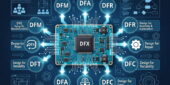
That’s why manufacturing engineers should obtain prototypes and engineering drawings as early as possible. Early involvement allows potential manufacturing risks to be identified before they become costly production problems. This process is commonly known as Design for Manufacturability (DFM).
In addition, implementing a Manufacturing Execution System (MES) during the pilot phase can help collect real-time production data, track process issues, and build a valuable knowledge base. These insights can significantly shorten the learning curve between pilot production and full-scale manufacturing.
Throughout Workingbear’s career in electronics manufacturing, new product introductions have been a constant part of the job. At the same time, legacy products still needed ongoing support. Looking back, many of the most valuable lessons came from pilot builds and close collaboration with R&D teams. Some experiences were challenging and frustrating at the time, but many later became memorable milestones in professional growth.
The next time you’re assigned to support a pilot build, consider it an opportunity rather than a burden. It may be one of the best chances you’ll have to learn new skills, broaden your experience, and make a meaningful contribution to the success of a product.
Related Posts:
- 8D Report: Problem Analysis and Solving
- Youtube: 5 Key Mindsets Before You Start Writing an 8D Report
- Introducing the Role and Responsibilities of Project Management (PM) in Electronics Companies
- Exploring EVT/DVT/PVT: Explaining the Three Crucial Validation Stages in New Product Development







Leave a Reply