

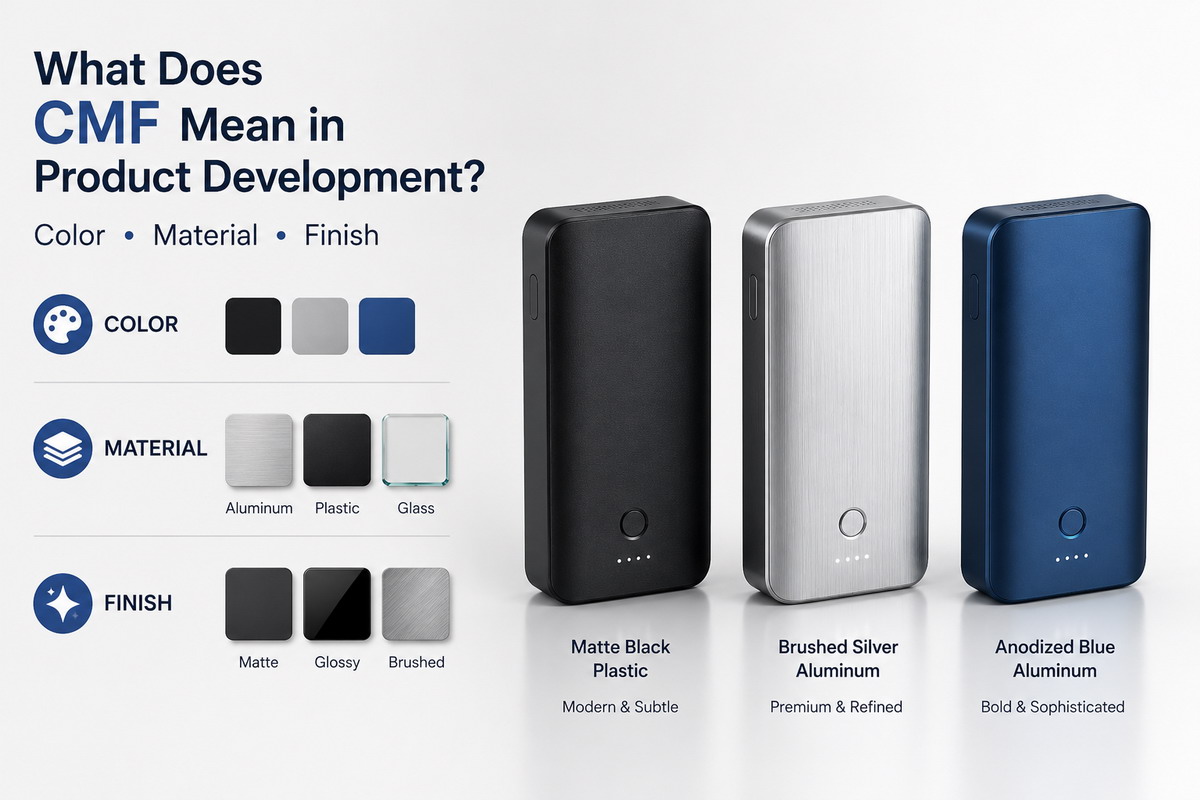
During new product development meetings, We often hears project managers (PMs) asking mechanical engineers (MEs) to confirm the CMF with the Industrial Design (ID) and Marketing teams before moving forward with tooling development. Otherwise, it could even affect the mechanical design itself. So, what exactly does CMF mean?
CMF stands for Color, Material, and Finish.
Our eyes are one of the most direct ways we perceive the world. When we look at a product, the first things we usually notice are its shape, material, color, and surface finish. Different materials evoke distinct visual and tactile impressions, while colors and surface finishes further shape our overall perception and emotional response to the product. Because these three elements — Color, Material, and Finish — are so closely interconnected, industrial designers often refer to them collectively as CMF.
For example, the aluminum or titanium housings used in iPhones undergo anodizing treatments to achieve specific colors, textures, and levels of gloss. This is a classic example of CMF design in action.
When industrial designers select materials for a product, they must consider more than just the material’s physical properties. They also need to think about what types of surface treatments can be applied and how those treatments will affect the final appearance. As a result, designers often describe a material’s visual characteristics using elements such as texture, color, and gloss level.
Of course, if industrial designers can also consider mechanical design requirements and manufacturing yield in addition to aesthetics, it can significantly reduce friction between the design, engineering, and manufacturing teams.
The reality is that many industrial designers are primarily focused on achieving the perfect visual appearance. Manufacturing cost and production yield are often secondary concerns. However, creating a flawless appearance usually comes at a price—it often requires more expensive processes, tighter manufacturing controls, and additional inspection or screening steps.
(You may disagree and point out that many industrial designers in Taiwan understand manufacturing processes and appreciate the importance of DFM (Design for Manufacturing). And that’s certainly true. However, how much influence do they actually have over the final product appearance? In many projects, the final design decisions are still made by customers or corporate headquarters. Over time, many designers and customers have also learned that if they push hard enough, the Taiwanese ME teams and factories usually find a way to make their vision a reality. There is no right or wrong here—just different perspectives and priorities.)
If possible, Workingbear strongly recommends confirming CMF requirements early in the development process and maintaining clear communication across all departments. Doing so can help accelerate product development while keeping costs, quality, and manufacturing risks under better control.
If you’re still not convinced of the importance of CMF engineering, let’s look at a real-world example that most people are familiar with.
Many people know that the raw material and manufacturing costs of an iPhone are not exceptionally high. Based on those costs alone, it may seem difficult to justify its premium selling price. What many people don’t realize, however, is that Apple has invested enormous amounts of time, money, and engineering effort into developing proprietary manufacturing processes and specialized equipment to achieve the exact CMF characteristics they want.
Because of that investment, Apple is able to deliver a highly refined look, feel, and user experience that many consumers value. As a result, even though iPhones are often priced significantly higher than competing smartphones, millions of customers are still willing to buy them. In many ways, they’re not just purchasing a phone—they’re paying for the premium appearance, feel, and overall experience created through CMF design.
Related Posts:
- Introducing the Role and Responsibilities of Project Management (PM) in Electronics Companies
- Exploring EVT/DVT/PVT: Explaining the Three Crucial Validation Stages in New Product Development
- Product Life Cycle (PLC) Explained: A Complete Guide to New Product Development in Electronics Manufacturing
- What Is POC (Proof of Concept)? Its Role and Relationship with EVT, DVT, and PVT in New Product Development





Leave a Reply