


A few days ago, a reader asked Workingbear about color variation issues between plastic injection-molded parts, and whether there are any good ways to better control color consistency.
The problem was probably caused by the purchasing team trying to reduce supply chain risk by placing different plastic molds with different injection molding vendors. During incoming inspection, each individual plastic part passed the color specification requirements and stayed within the defined upper and lower tolerance limits. However, once all the plastic parts were assembled into the final product, obvious color mismatch issues became visible between the parts.
Although Workingbear had already replied to the reader, I later realized there were still a few important points worth adding, so I organized the topic into a more complete discussion below.
Personally, I don’t think it’s wrong for purchasing teams to place molds with multiple injection molding suppliers. It does help reduce supply chain risk, and it also gives purchasing more leverage during price negotiations. While this approach does make engineering quality control more difficult, there are still several ways to effectively manage plastic quality and color consistency. Of course, some of these methods require cooperation from the purchasing department so that engineering quality and purchasing cost targets can stay balanced.
Below are several methods that our company already uses—or could use—as references for everyone.
1. Use a Single Color Compounding Supplier
Most companies already use an AVL (Approved Vendor List) or similar system to specify approved resin suppliers. However, very few companies actually specify who is allowed to perform the color compounding process for the plastic resin.
Workingbear strongly recommends standardizing the color compounding source and process. It’s important to work with a qualified color compounding supplier and require all molding vendors to either purchase colored resin from the same supplier or send their resin to the same color compounding house.
Color compounding is extremely important. Based on experience, even the same supplier may produce slightly different colors between batches. So if different suppliers are handling the coloring process independently, the risk of major color variation becomes even higher.
Using the same resin source and the same color compounding supplier can greatly reduce color differences between parts produced by different molding vendors.
2. Use Resin Manufacturer Color Compounding
If possible, Workingbear highly recommends having the original resin manufacturer handle the coloring process directly. This gives better consistency in both resin quality and color stability.
Of course, this usually requires fairly large order volumes before resin manufacturers are willing to provide custom coloring services. And not every resin supplier offers this capability. From what I know, SABIC (formerly GE Plastics) does provide this service, while Avient (formerly PolyOne) and Samsung generally do not.
The reason Workingbear strongly prefers resin manufacturers to handle coloring is because it helps ensure that the mechanical properties of the resin remain stable. In addition, resin manufacturers are usually much less likely to secretly mix in recycled material that could affect quality.
Maybe someday we can also talk about some of the “behind-the-scenes” practices in plastic blending and color modification.
3. Mold Placement Strategy
Whenever possible, molds for the same product should stay at the same injection molding supplier.
A company can certainly work with multiple molding vendors, but the upper and lower housings for the same product should ideally be molded by the same supplier. This helps reduce color mismatch risks and also makes it easier to troubleshoot dimensional fitting issues.
On the other hand, if molds for the same product are split between different suppliers, it may not actually reduce risk very much. If just one supplier fails to deliver, the entire product build may still stop.
Of course, this mainly applies when there is only one mold set. If multiple mold sets exist, then distributing complete mold sets across different suppliers may still make sense.
4. Define Color Difference Specifications Properly
If every individual plastic part meets color specification, but the assembled product still shows obvious color mismatch, then the color tolerance itself is probably defined too loosely.
Companies always create a single generic color tolerance and apply it to every plastic color simply for convenience. But human vision is subjective. Certain colors—especially pure white and pure black—can show visible differences even when the ΔE value is very small.
Because of this, Workingbear recommends defining different ΔE tolerance limits for different colors instead of using one universal standard.
Currently, the two most common color difference formulas used in industry are:
-
ΔE*ab (CIE76):
This is the traditional formula. It is simple to calculate, but it does not always match human visual perception very well, especially for certain color ranges. -
CIEDE2000 (ΔE00):
This is the newer industry-preferred formula introduced after 2000. It includes more accurate corrections for how the human eye perceives brightness, saturation, and hue differences. It is especially suitable for high-appearance applications like plastic cosmetic parts.
Many advanced color meters already support CIEDE2000 by default, and Workingbear recommends using it for new projects whenever possible because it better reflects actual customer perception.
In addition, the following measurement conditions should also be standardized:
- Use D65 (6500K daylight simulation) as the standard light source, since it is commonly used in the plastics and coatings industries.
- Use the 10° standard observer for most plastic part evaluations because it better represents large-area viewing. For small detailed comparisons, a 2° observer may also be considered.
- Ideally, both instrument measurement and visual inspection should be performed inside a standardized light booth to minimize environmental lighting effects.
Once these conditions are properly defined, color evaluations between different molding vendors become much more objective.
5. Consider Color Difference During the ID Design Stage
If marketing allows it, another practical solution is to intentionally design the upper and lower housings with different colors during the Industrial Design (ID) stage.
That way, even if slight color variation exists, customers are much less likely to notice it or reject the product. This can effectively eliminate the color matching issue altogether.
6. Standard Color Chips Management
Personnel responsible for mold management should maintain standardized color chips. These color standards should ideally be updated at least every two years and stored in black protective bags to prevent fading caused by light exposure.
It’s also recommended to document the L, a, b, and ΔE values of the standard samples and define acceptable Δ ranges. This helps reduce long-term drift in the color standards themselves.
Related reading: MRB (Material Review Board) Meetings and Cosmetic Judgment for Plastic Parts in Manufacturing


7. Use Pantone Standard Color References
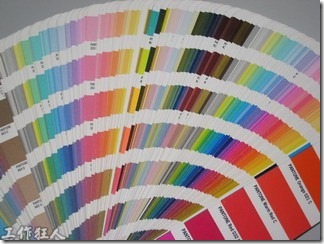
Workingbear strongly recommends using industry-standard color references such as Pantone color guides to define plastic colors.
At my company, we originally used internally defined color standards. However, every time the color cards were updated, the colors shifted slightly, and suppliers struggled to match the target appearance consistently.
Eventually, we standardized on Pantone color references, and the situation improved significantly.
Final Thoughts
In the end, color variation control is really the combined result of people, machines, materials, methods, and environment.
Engineering and purchasing teams must work closely together in order to balance both quality and cost effectively.
Related Posts:





Leave a Reply